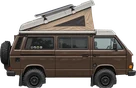
Preparing for the trip

There are quite a few things to think about for a trip like this, so I've split them into categories.
- Route
- Health
- Paperwork
- Vehicle
- Tools
While preparing, I spent a lot of time reading blogs and watching vlogs. Channels I can highly recommend:
Route
The route was probably the first big step in planning the trip. If you look at a map and draw a line between Germany and Nepal, it passes through almost exactly the countries we cross:
Europe – Turkey – Iran – Pakistan – India – Nepal
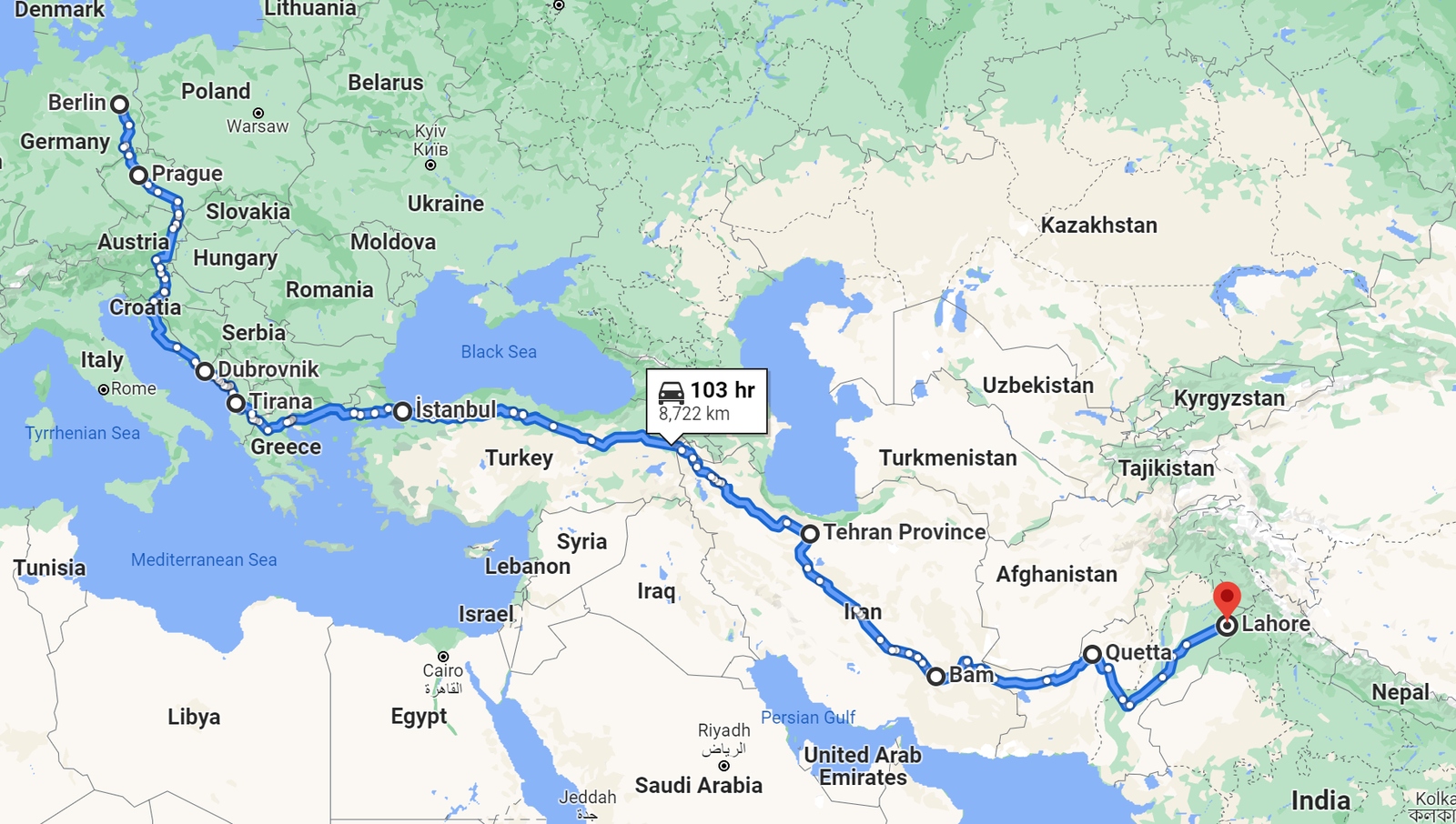
This route seems to be the simplest, because alternative overland routes inevitably go through China, which means extra effort for both the visa and importing the vehicle. On top of that, travelling there in your own vehicle is only possible with a guide, which can be very expensive.
These links are very helpful when it comes to visas and up-to-date information on borders and requirements.
On the route through Iran and Pakistan, bear in mind that from the Iranian city of Zahedan via Quetta in Pakistan you're escorted for a good 1,000 km. That means the military or police drive ahead of you, armed accordingly, to protect you if anything happens.
Getting as far as Turkey is really no problem. The roads are good, visas aren't an issue for Europeans and you're not really entering risky areas. Germans can enter Turkey without a visa, too. For the following countries – Iran, Pakistan, India and Nepal – you need a visa, which you can apply for online and may have to collect from an embassy.
Depending on the country, the visa applications ask for accommodation, contact persons in the country, your blood group and of course previous visas.
I only started on the visa procedure two weeks before leaving.
Health

A friend with medical training advised me on this. I got the following medicines:
- 2x N1 ibuprofen 400 mg
- 2x N1 paracetamol 500 mg
- 1x N1 loperamide 2 mg
- 1x N1 Buscopan 10 mg
- 1x N1 Vomex suppositories
- 1x charcoal tablets
- 1x N1 Elotrans (oral rehydration salts)
- 1x N2 Dolo Dobendan (throat lozenges)
- 1x N1 Silomat tablets (cough)
- 1x N1 ACC 600 mg effervescent tablets
- (1x Fenistil drops)
- (1x N1 caffeine tablets)
- 1x small Octenisept wound disinfectant spray
- 1x hand sanitiser
I also went to a travel medicine specialist for advice on which medicines I absolutely need and which vaccinations are recommended.
For India, for example, vaccinations against rabies, cholera and typhoid are recommended. Being vaccinated against Covid-19 of course saves a lot of hassle, as you don't have to show a negative PCR test before every border crossing.
Seeing a travel or tropical medicine doctor is definitely worthwhile. Malaria and dengue fever, among others, are two very unpleasant and sometimes deadly diseases that can be transmitted by mosquito or insect bites. There are various prescription drugs for malaria prevention, some of which can also be used for treatment. Whether it's dengue or malaria, make sure you protect yourself from bites with repellents such as NoBite, long clothing or mosquito nets.
International health insurance is of course highly recommended.
Paperwork

The following documents are essential for entering countries such as Iran and India:
- International driving permit
- International vehicle registration certificate
- National vehicle documents
- National driving licence
- International insurance card (green card)
- Passport (valid for at least 2 years)
- Carnet de passages
- Proof of valid health insurance, if required
National and international vehicle documents and driving licences have to be applied for well in advance at the vehicle registration office. In my experience, that can take a month.
The carnet de passages is a customs document that acts as a guarantee for the country of entry that the imported vehicle will be exported again. To get it, you have to be a member of an automobile club. In Germany only the ADAC can issue it, but membership of another club in the AdV is enough to apply for the document through the ADAC.
To get the carnet, you have to provide various vehicle details and, depending on the region you're travelling to and the value of the vehicle, pay a deposit of between €5,000 and €25,000 or provide a bank guarantee.
Vehicle
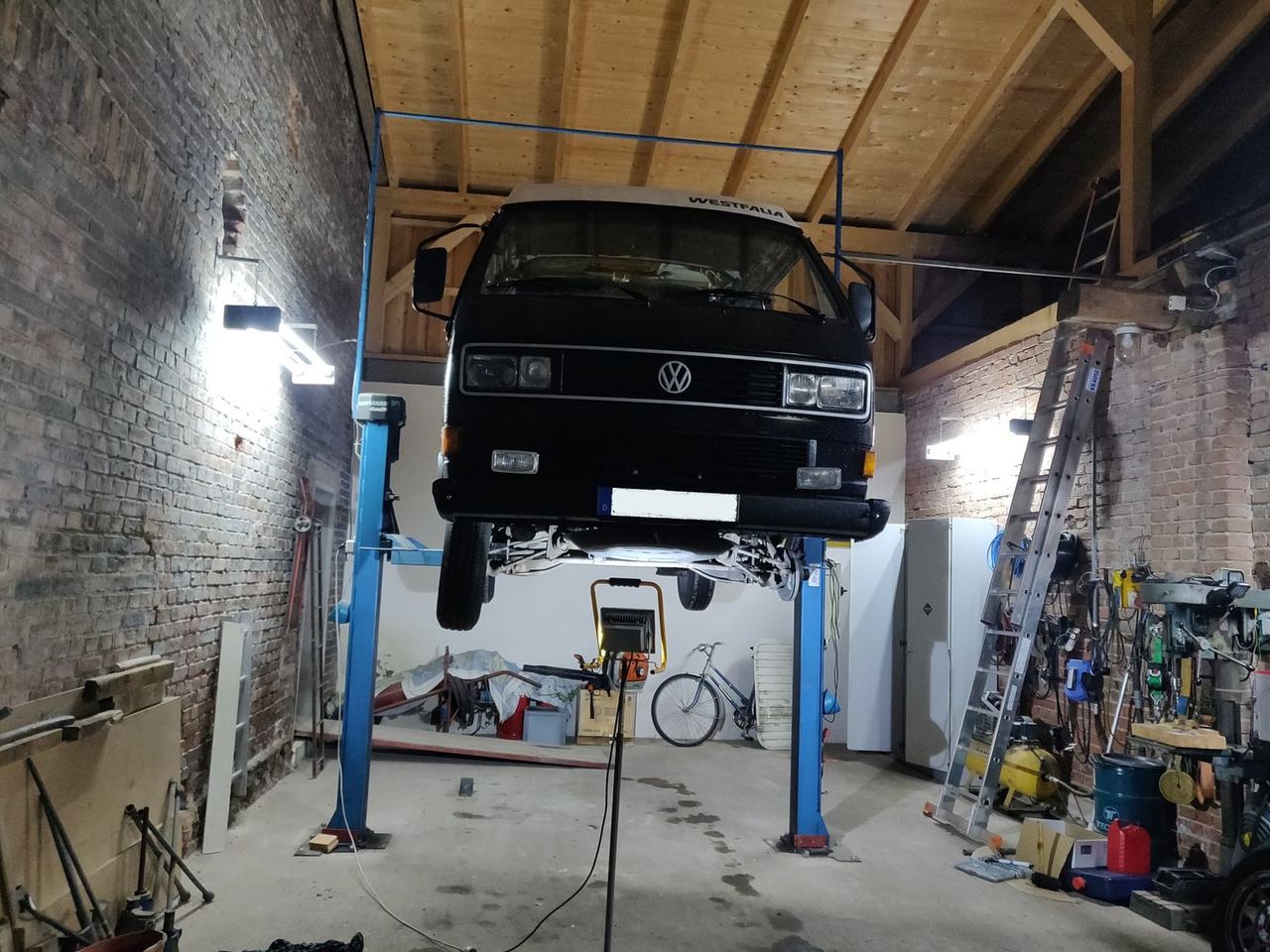
ADAC Premium membership gives me peace of mind for breakdowns outside Europe. If a repair or transport to the nearest garage isn't possible, at least the occupants get rescued. I think that's a fair deal 😀
You'll find plenty about the vehicle in the builds section. But here are the important things I did before the trip:
- Changed all fluids (brake fluid, hydraulic oil, coolant, gear oil, engine oil, emptied the fuel tank)
- Renewed all brakes
- Replaced cracked suspension bushes
- Changed filters (air, fuel, oil)
- New tyres
- Fitted an oil cooler
- Changed all belts (power steering, alternator and timing belt)
- Replaced the clutch
- Had the injectors checked
- Replaced the glow plugs
- Had the starter motor and alternator checked
Tools

My aim was to have everything with me to be able to remove the engine. Back then I still had the original JX engine fitted. That goal isn't too hard to reach: besides a decent socket set, you really only need a jack and lots of patience to take the engine out (plus stones or wooden blocks to get the rear up). During the engine swap, this list of tools on board was completed.
Spanners and sockets
- Socket set
- 8 mm combination spanner
- 10 mm combination spanner
- 2x 13 mm combination spanners
- 2x 17 mm combination spanners
- 19 mm combination spanner
- 21 mm combination spanner
- 24 mm combination spanner (suspension)
- 27 mm combination spanner (suspension)
- 32 mm combination spanner (suspension)
- 46 mm socket (hub nut)
- 27 mm socket (injectors)
- ½ to ¾ inch adapter for the ratchet
- External multi-point socket set (turbo and crankshaft)
- Internal multi-point (XZN) socket set (drive shaft, pulleys if needed)
Mechanical
- Needle-nose pliers
- Water pump pliers
- Side cutters
- Utility knife
- Hammer
- Chisel
- Saw
- File
- Timing belt kit with dial gauge 2066 / 2065A
- Sikaflex
- Long-life grease
- Copper paste
- High-temperature sealant
- Paint
- WD-40
- Brake cleaner
- Oil filter wrench (valuable for changing belts)
- LED lamp
- 5-piece drill bit set
- Bit set
- Cordless drill
- Pipe for extra leverage
- Three-arm puller
Spare parts
I don't carry too many spare parts, since I replaced a lot myself. For bigger failures like the oil pump, I'll have to think of something …
- Power steering belt
- Alternator belt
- Timing belt kit (not sure how unevenly the new one will wear)
- 5 l engine oil
- Fuel
- Fuel hose
- Assorted metric bolts and nuts
- Valve cover gasket set
- Injection pump seal kit
- Self-tapping screws
- Pipe clamps
Electrics
- Assorted cable lugs
- Assorted crimp sleeves
- Assorted heat-shrink tubing
- Assorted solder-seal connectors
- Wago connectors
- Cable ties
- Insulating tape
- Assorted short cables
- Car fuse set
- Bulb set
- Solar connectors
- Multimeter
- Wire
- Hot glue sticks
- Solder
Other
- 4 t winch
- Tow rope
- 10 m jump leads
- 2x ratchet straps
- 12 V compressor
- Sand ladders
- 25 l fuel cans
- 90 l underfloor water tanks
- Jack
- Funnel
- Rags