
Build Drivetrain & chassis
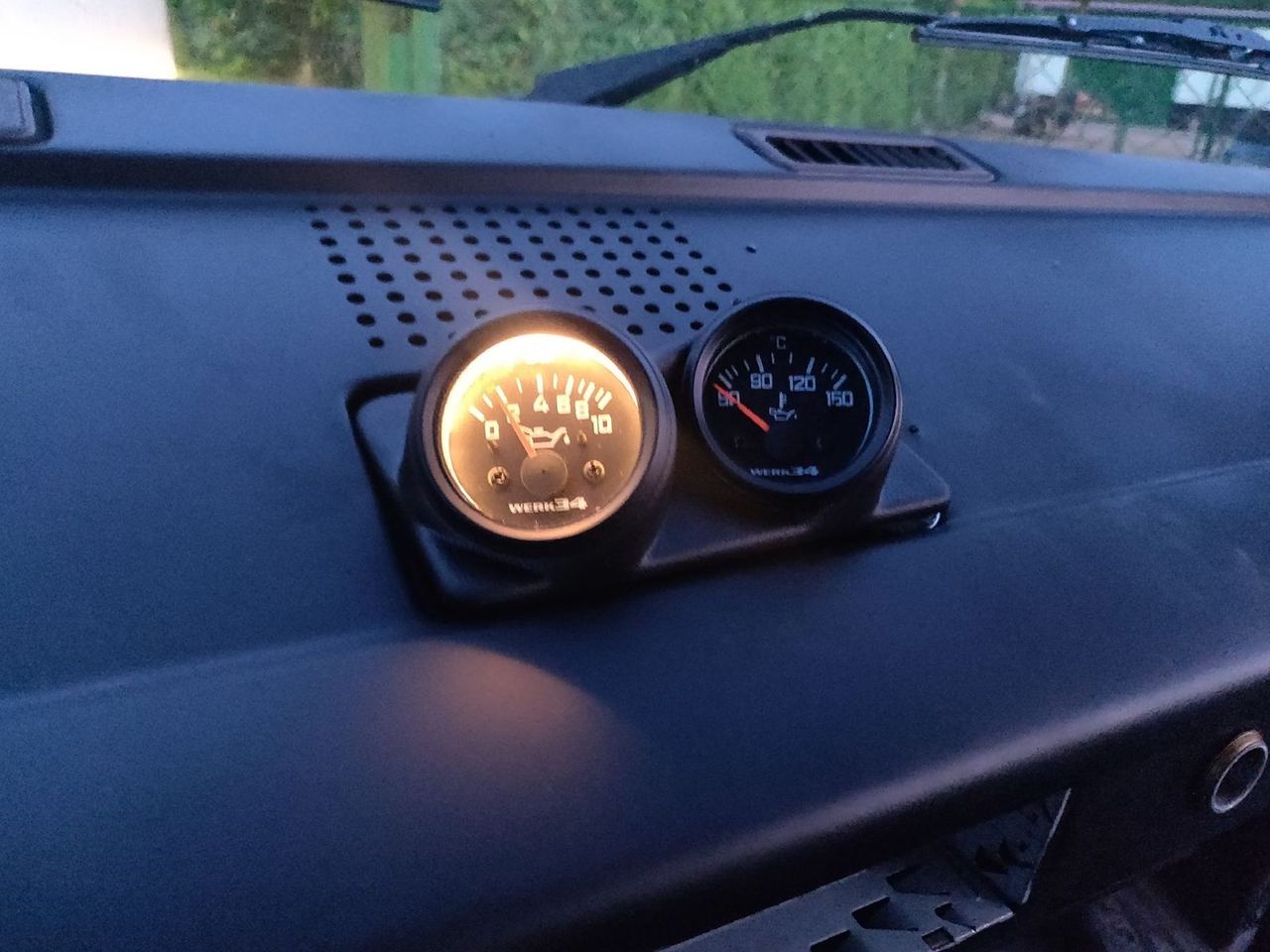
Oil cooler with oil temperature and oil pressure gauges
The T3's JX engine is known for getting hot quickly under heavy load, whether from mountain driving or the extra weight of camping gear – and that takes its toll on the engine's lifespan. The oil can easily reach 120 °C. Because the engine sits at the back of the vehicle, fresh air has a long way to go to help the coolant cool it. That's why it's a good idea to fit an oil cooler. With the AAZ engine it's a must, as it runs even hotter.
Installation
There are several options for where to put the oil cooler. The most common one is at the front, in front of the radiator. Another would be underneath the vehicle on the left, in front of the engine. That location needs much less hose, but the cooling effect is probably lower.
I mounted the 19-row oil cooler at the front. For this I made four brackets from 1.5 mm sheet steel and fixed them with hose clamps to the struts behind the grille. The supply and return lines run underneath the vehicle; the bend angle at the oil cooler itself must not be too tight. Where the lines are fixed under the vehicle, I added protective sleeving so the cable ties don't chafe through the oil lines. The lines end with the angled fitting at the oil filter, where the adapter plate is mounted between the oil-to-water heat exchanger and the filter. The oil filter needs to be slightly shorter so it doesn't rub against the coolant hose.
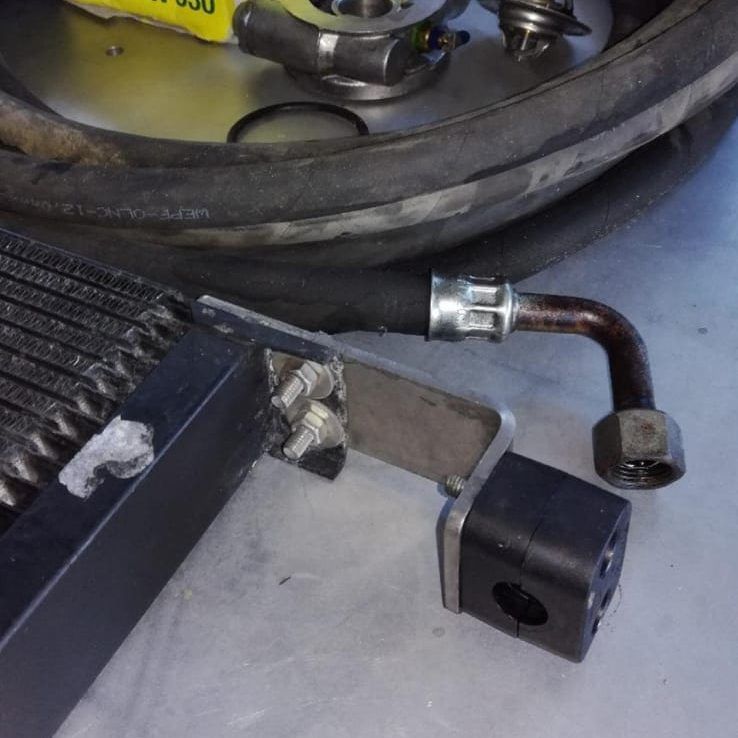
The extra oil pressure and temperature gauges need an oil pressure sender and a temperature sender. The simple solution is to fit both sensors with a Y-piece on the engine block, where the oil pressure switch originally sat. That switch is no longer needed, because the oil pressure sender replaces it. I decided against this, though, because the temperature isn't measured accurately there – there's no real flow at that point. So I screwed the temperature sensor into the adapter plate instead: I drilled and tapped an M10x1 thread, screwed in the short sensor and sealed it with high-temperature sealant.
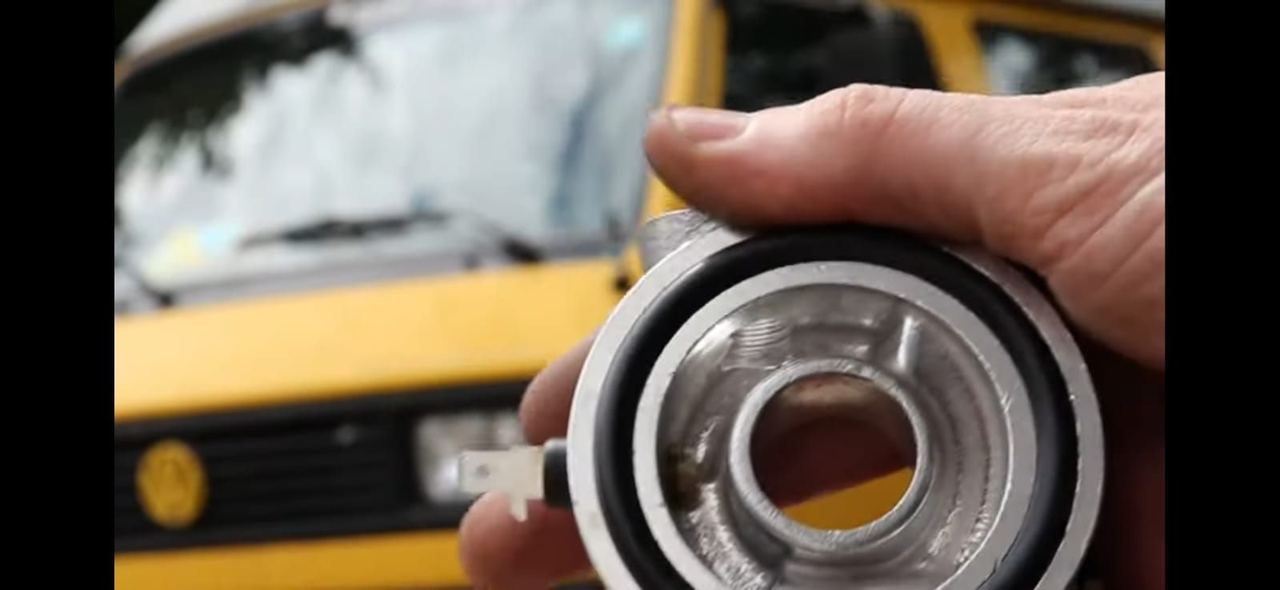
The wires for the two sensors run forward along the oil lines in conduit. Like the engine's other wiring, they enter the cabin, where they're connected to the gauges.
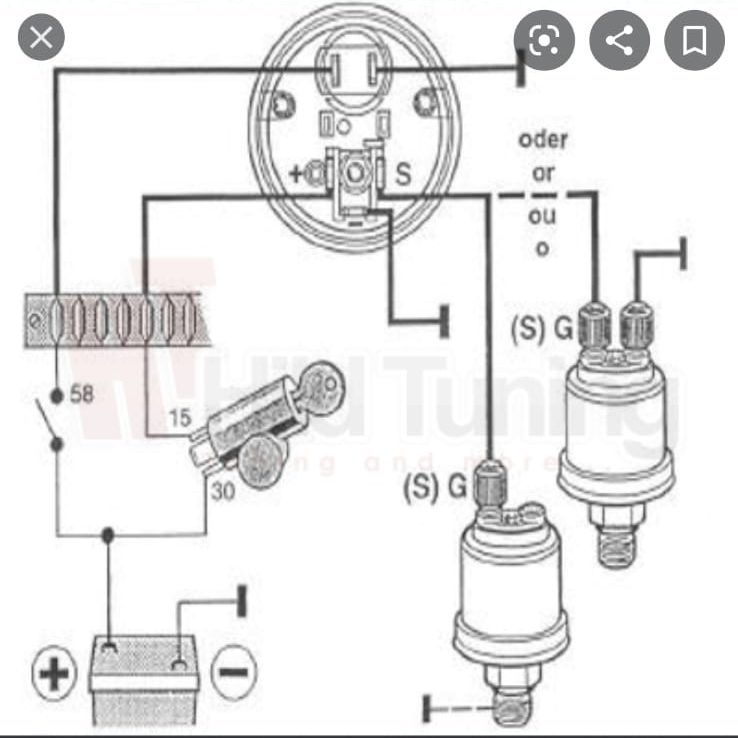
The gauge holder fits into the recess of the original ashtray. Power can be supplied as shown in the picture.
Components (with links)
M10x1 die €4
Oil pressure sender, 10 bar €24
19-row oil cooler €200
The adapter plate has a built-in thermostat, so the circuit to the cooler only opens at 80 °C. Even with a loaded bus and mountain driving, the engine almost never reaches 100 °C; around 85 °C is normal. With the AAZ engine warm, the oil pressure at 2000 rpm is around 1.5 bar.